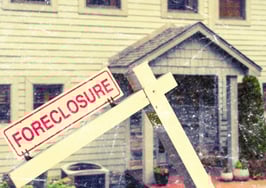

The Supreme Court has rejected a Michigan homeowner’s push to conduct tax foreclosure sales on the open market, increasing the profits that owners receive after authorities use the sale proceeds to resolve a real estate tax balance.
Michael Pung lost his home after failing to pay $2,241.93 in property taxes. To recoup the balance, Isabella County’s tax authorities initiated foreclosure proceedings and sold the Pung home via auction for $76,008 — well below the $194,400 assessed value. After closing, Pung received surplus proceeds of $73,766.07.
TAKE THE INMAN INTEL INDEX SURVEY
However, the homeowner believed “just compensation” would have come from the tax authorities selling the home on the open market, where it could have sold for closer to its assessed value, increasing the surplus proceeds.
The Court’s justices said Pung’s argument fell flat, noting that the homeowner had other options to avoid foreclosure.
“If a property owner receives proper notice that his or her property may be sold to recover unpaid taxes and if the owner believes that the fair market value of the property exceeds the taxes that are due, the owner may be able to avoid foreclosure by refinancing the property or using the property as collateral for a new loan to pay off the taxes,” Justice Samuel Alito wrote in the opinion. “Or the owner may be able to sell the property (or other property) himself before foreclosure, pay off the tax debt, and keep what is left to buy or rent a new home.”
“Our Nation’s history and this Court’s precedent thus establish the principle that when the government seizes and sells property to collect a tax debt, the owner is entitled to the surplus sale proceeds — nothing less, and nothing more,” he added. “The baseline for measuring just compensation in the tax-sale context is therefore the sale price, not the property’s hypothetical fair market value, at least when the sale is fairly conducted in light of our country’s history of tax sales.”
The opinion also highlighted potential challenges with selling foreclosed homes on the open market, such as a longer timeline to recoup taxes and “the costs and risks that go with the ownership of unoccupied homes.”
Although they didn’t formally dissent, Justices Clarence Thomas and Neil Gorsuch questioned whether Isabella County properly initiated foreclosure proceedings against Pung, saying there was a question on whether Pung actually owed the $2,241.93 in real-property taxes.
Pung’s attorney, Larry Salzman, vice president for litigation at the Pacific Legal Foundation, told The Associated Press that the case is going back to the lower courts, in hopes of convincing judges there that Isabella County mishandled Pung’s alleged tax debt.
“The case isn’t over,” said Salzman. “The Pungs won the right to continue their fight in the lower courts.”