Jerome Powell’s Tenure as Fed Chair
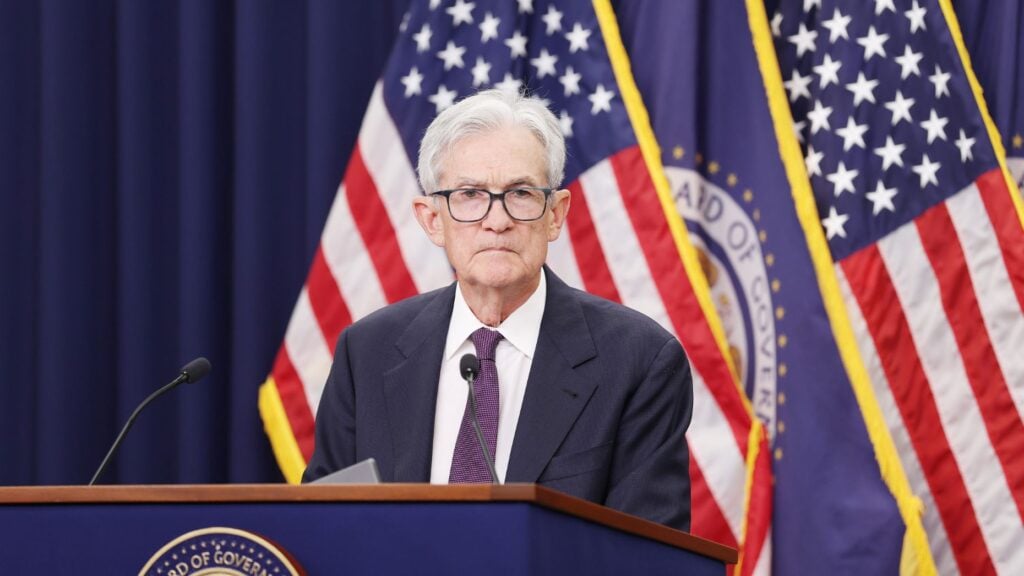
Jerome Powell was sworn in as chair of the Federal Reserve in 2018. The ensuing years then proved to be some of the most consequential in the Fed’s history. Now, Powell will step down from his role as chair later this week. In honor of the occasion, we’ve created the interactive timeline below to highlight key moments from Powell’s time as chair.
Powell sworn in as 16th chair of the Federal Reserve
A lawyer and former Carlyle Group partner, Powell took office as the first non-economist to lead the Fed since Paul Volcker. Nominated by President Donald Trump and confirmed 84-13 by the Senate, he succeeded Janet Yellen and inherited an economy with low inflation, low unemployment and a federal funds rate of 1.25%–1.5%.
Pandemic response: rates slashed to zero, QE relaunched
As COVID-19 froze the global economy, Powell’s Fed acted in two emergency moves — cutting rates by half a point on March 3 and then to a target range of 0%–0.25% on March 15 — and launched a $700 billion round of Treasury and mortgage-backed securities purchases. The interventions helped push mortgage rates to historic lows and supported a housing boom, but later drew criticism for fueling home-price inflation.
Fed kicks off rate-hike cycle to fight inflation
After conceding that inflation was no longer “transitory,” Powell led the Federal Open Market Committee in raising the federal funds rate by 25 basis points — the first of 11 hikes that would total 5.25 percentage points by July 2023. Mortgage rates would more than double over the cycle, freezing the housing market.
Biggest rate hike since 1994; Powell tells homebuyers they “need a bit of a reset”
The Fed approved a 75-basis-point hike — its largest since 1994 — and Powell delivered a now-infamous message to the housing market, saying buyers needed a “reset” to bring supply, demand and rates back into balance. The comment became a touchstone for an industry whipsawed by rising rates.
Sworn in for a second term under President Biden
President Joe Biden re-nominated Powell despite opposition from progressives, citing the need for steady leadership during the post-pandemic inflation surge. The Senate confirmed him 80-19 on May 12, and he was sworn in May 23 for a four-year term as chair set to expire May 15, 2026.
Jackson Hole “pain” speech rattles markets
In a hawkish address at the Fed’s annual Jackson Hole symposium, Powell warned that taming inflation would require “some pain to households and businesses.” Stocks tumbled and the prospect of further aggressive hikes was firmly back on the table.
Fed presses ahead through SVB and Signature collapses
Days after the failures of Silicon Valley Bank and Signature Bank shook regional lenders, Powell led the Federal Open Market Committee in approving another 25-basis-point hike, declaring the banking system “sound and resilient.” The Fed signaled it was nearing the end of its tightening campaign.
Final hike of the cycle: federal funds rate hits 5.25%–5.5%
The Fed’s 11th hike since March 2022 lifted the benchmark to its highest level in 22 years. Powell would hold rates at this level for 14 months as policymakers waited for proof that inflation was sustainably returning to 2%.
Fed pivots: first rate cut in four years, by 50 basis points
Powell’s Fed kicked off its easing cycle with a jumbo half-point cut — its first reduction since the pandemic. Governor Michelle Bowman dissented in favor of a smaller quarter-point cut, becoming the first Fed governor to dissent on a rate decision since 2005. Mortgage rates briefly hit a 2024 low of 6.03% before climbing back as bond markets repriced.
Fed cuts again days after Trump’s reelection
The Fed lowered rates another quarter point at a meeting that had been pushed back a day for the election. Powell deflected questions about Trump’s victory, vowing the Fed would not be swayed by politics, and stated bluntly that he would not resign if asked.
Fed pauses cuts; Trump pressure begins in earnest
After three cuts totaling a full point in late 2024, Powell held rates steady, saying the Fed was in “no hurry” to ease further as tariffs, immigration policy and tax changes injected fresh uncertainty. The decision triggered a year-long campaign of public criticism from President Trump.
Trump tours Fed HQ as renovation costs become political flashpoint
Cost overruns on the Fed’s headquarters renovation — to nearly $2.5 billion from a $1.9 billion estimate in 2021 — became the basis for an extraordinary public pressure campaign. FHFA Director Bill Pulte called for Powell to resign; Trump publicly mused about firing him. Powell stood firm, defending the project and the Fed’s independence.
Powell signals pivot at his final Jackson Hole address
In what would be his last Jackson Hole speech, Powell said the “balance of risks” had shifted from inflation toward employment, telegraphing a return to rate cuts. Mortgage rates dropped sharply on the news.
Fed resumes cutting; lone Trump appointee dissents for bigger move
The Federal Open Market Committee voted 11-1 to cut by 25 basis points. Recent Trump appointee Stephen Miran dissented, holding out for a half-point cut. Powell said housing was “at the very center of monetary policy” but warned the deeper issue was a nationwide supply shortage.
Second cut of 2025; Fed announces end of quantitative tightening
The Fed cut another quarter point in a 10-2 vote and confirmed it would halt its balance-sheet runoff on Dec. 1, ending a 3-year program that had trimmed $2.2 trillion. But Powell warned that a December cut was “far from” a foregone conclusion, sending mortgage rates higher.
Third cut of the year; succession battle takes shape
The Fed approved a third quarter-point cut in a divided 9-3 vote. Powell flagged that official payroll data was likely overstating job creation by 60,000 jobs a month. Days earlier, the Fed board reappointed 11 of 12 regional bank presidents — a move Fed-watchers read as fortifying the central bank’s independence ahead of the leadership transition.
DOJ launches criminal probe of Powell; Trump nominates Kevin Warsh
The Justice Department opened a criminal investigation into whether Powell misled Congress about the Fed’s renovation costs — a move that drew rebukes from former Fed chairs Greenspan, Bernanke and Yellen, who called it “an unprecedented attempt to use prosecutorial attacks to undermine” Fed independence. On Jan. 30, Trump nominated former Fed governor Kevin Warsh as Powell’s successor.
DOJ closes Powell probe, clearing path for Warsh
U.S. Attorney Jeanine Pirro announced she was closing the criminal probe and handing the matter to the Fed’s inspector general, while warning she “will not hesitate” to restart it. The move freed Sen. Thom Tillis to drop his hold on Warsh’s confirmation.
Powell’s final meeting: rates held, four dissents, and a decision to stay
In what’s expected to be his last meeting as chair, Powell led an 8-4 vote to hold rates at 3.5%–3.75% — the most dissents at a single Federal Open Market Committee meeting since 1992. At his press conference, Powell announced he will remain on the Fed’s Board of Governors after his chairmanship ends May 15, saying the legal attacks on him “left me no choice but to stay.” He would be the first chair since Marriner Eccles in 1948 to remain on the board.
Term as chair ends; Warsh era begins
Powell’s four-year term as chair will officially end after more than eight years. He is expected to stay on as a Fed governor, with his term running until January 2028. Trump has nominated Kevin Warsh to replace Powell.